

Contact Adhesives
Coat both faces, let it flash, bring them together.
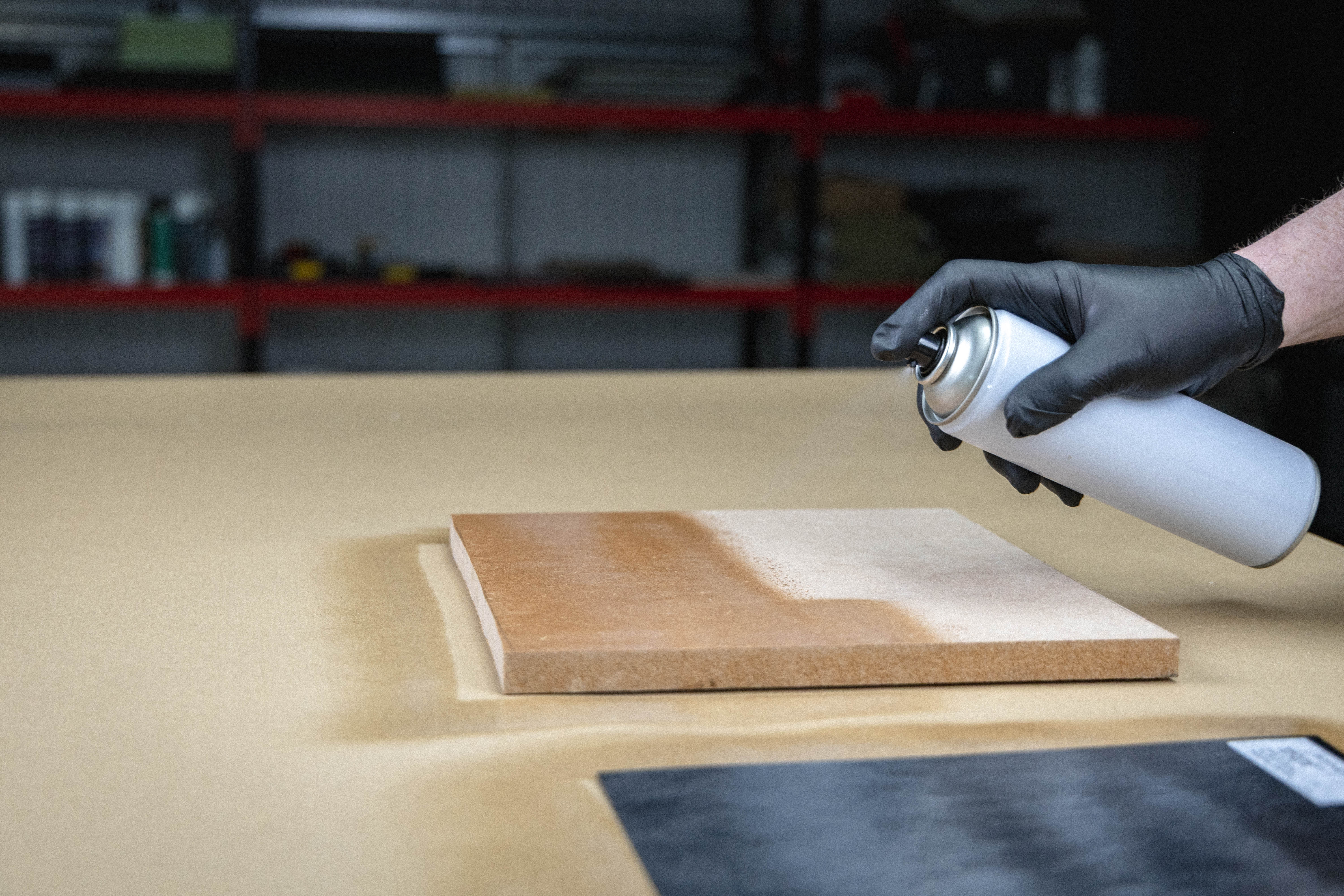
Contact adhesive is sprayed onto both surfaces, left to flash off, then brought together under pressure for an immediate bond. It is the fastest way to cover large areas with consistent adhesive film.
Available in solvent-based rubber & resin and polyurethane chemistries, in water-based chemistries, in sprayable epoxy and in MS Polymer chemistry, supplied in aerosol, canister and bulk formats.
Clean down, remove loose material and make good. Check the substrate is sound and dry.
Even 60% to 100% coverage using the correct spray tip.
Wait until tacky but not wet, typically 1 to 5 minutes. See the product technical data sheet (TDS) for full detail, as flash-off varies product by product.
Bring together and roller the full area. Bond is immediate.
How much coverage do I get per canister?⌄
Coverage depends on tip, substrate porosity and film weight. Actual figures are available on the product technical data sheet (TDS), per product.
Can I bond one face only?⌄
Not with a true contact system. We do, however, have solvent-based adhesives that are single sided, for lower demand applications.
Single Sided Products
One face coated. Half the application time.

Single sided systems are applied to one surface only, cutting application time and adhesive consumption on jobs where a full contact bond is not required.
Common on insulation boards, membranes and lightweight panel work, and in flooring for tackifying carpet tile applications.
Substrate clean, dry and structurally sound.
Spray or bead the fixed surface only.
Place the second surface within the stated open time.
Apply even pressure across the full area.
Is the bond as strong as a contact system?⌄
Strength is equal to that of a contact adhesive. Which one you use depends on the application rather than the bond strength available.
Which face should be coated?⌄
The fixed or more porous surface, unless the technical data sheet says otherwise.
1K & 2K PU Bead / Fan Spray System
Polyurethane, laid down as a bead or a fan.
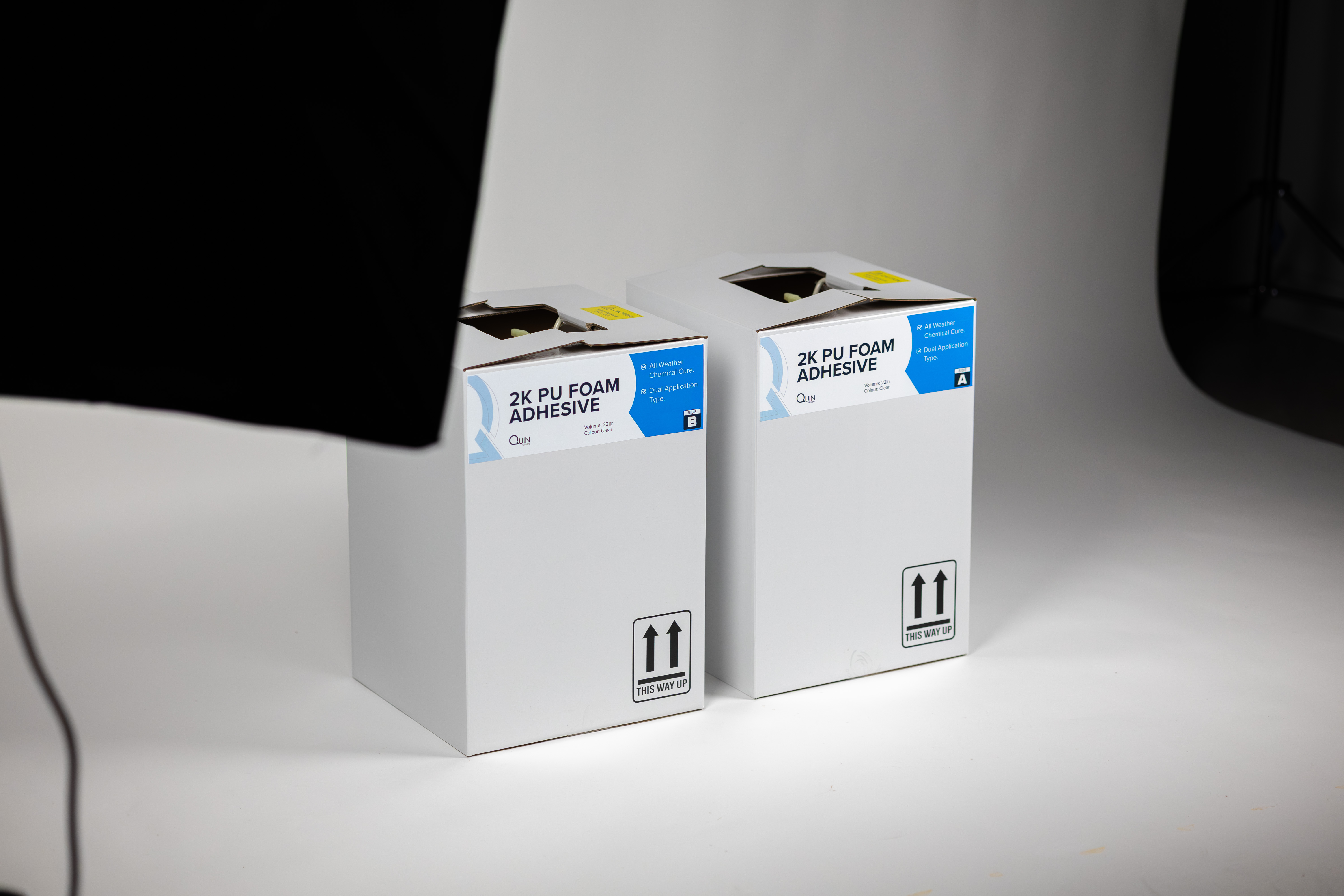
Polyurethane systems cure chemically for a tough, flexible, weather-resistant bond. One-component grades cure with ambient moisture; two-component grades cure on mix and are independent of conditions.
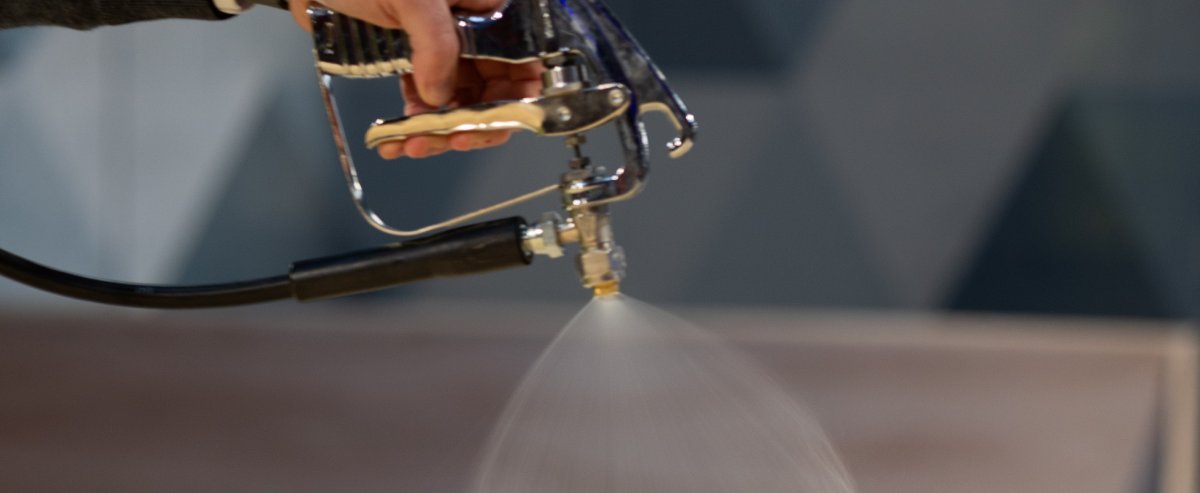
Delivered through bead applicators for line work or fan spray for full-area coverage.
Check substrate moisture and temperature.
Bead for perimeter and rib fixing, fan for full coverage.
Maintain consistent gun speed and distance.
Weight or clamp until the stated cure is reached.
When should I choose 2K over 1K?⌄
When cure cannot depend on ambient humidity, or when a faster, more predictable cure is required.
Is the cured bond flexible?⌄
No. The cured bond is rigid rather than flexible.
Coatings
Waterproof coatings for roofing
Seamless waterproofing, applied in place.
Coatings are liquid-applied waterproofing for roofs. Rather than bonding two parts together, they cure in place to form a seamless, fully adhered membrane over the existing roof, sealing details and upstands that sheet materials struggle to follow.
Used across refurbishment and protection work, where stripping and replacing the roof is neither practical nor economic. The range includes the primers that prepare the substrate ahead of the coating itself.
Clean down, remove loose material and make good. Check the substrate is sound and dry.
Prime where the substrate requires it, then treat laps, upstands and penetrations first.
Work across the main area, holding the specified wet film thickness throughout.
Allow full cure, then check film thickness and integrity across details before handover.
Can a coating go over an existing roof?⌄
In most cases yes, provided the existing surface is sound, clean and compatible. That is the usual reason for specifying a coating over a strip and re-cover.
How many coats are needed?⌄
Grade dependent. Most systems specify two coats with a stated interval. See the product technical data sheet (TDS) for the film build required.